
Balsamo Group, the Italian excellence in mobility management conquering the world (Gist Magazine) -...
Every year, the World Economic Forum (WEF) brings together political leaders, CEOs, international institutions, entrepreneurs, and innovators from around the world. It is not just an event: it is a global convergence point where visions, alliances, and decisions are shaped that will influence economies and societies for years to come. The 56th Annual Meeting of the WEF is taking place in Davos-Klosters, Switzerland from 19 to 23 January 2026, under the theme “A Spirit of Dialogue,” reflecting the urgent need for collaboration amid rising geopolitical and economic complexity.
At a gathering of this level, nothing is left to chance. Every detail matters — and mobility becomes a silent yet decisive component of the event’s success.

The WEF as a Global Ecosystem, Not Just an Event
The World Economic Forum represents a unique format on the international stage:
-
Thousands of leaders from business, government, civil society, academia, and innovation sectors gather together — nearly 3,000 participants from over 130 countries in 2026.
-
Record participation of political leaders: Around 400 top political figures, including nearly 65 heads of state and government, are expected this year.
-
Extensive CEO and corporate representation: Close to 850 CEOs, chairs, and top executives will attend, along with nearly 100 leading unicorns and tech pioneers shaping the future of innovation.
For a few days, Davos becomes the center of the global stage — a place where time is a critical resource, and the ability to move smoothly, safely, and reliably is integral to the experience.
Mobility and Leadership: An Inseparable Duo
During the World Economic Forum, transportation is not just a transfer. For ultra-high-value individuals — including heads of state and institutional delegations, top executives, innovation leaders, and media stakeholders — every movement counts.
In this scenario, mobility must be: perfectly coordinated, adaptable to real-time schedule changes, discreet and secure, fully integrated with logistics, security, and protocol.
The quality of mobility management directly affects relationship quality, meeting efficiency, and the overall event experience.
Highlighting Major Delegations and Participants in 2026
The 2026 edition sees participation from a wide and influential array of global leaders:
Heads of State and Government (examples):
-
Donald Trump, President of the United States of America
-
Mark Carney, Prime Minister of Canada
-
Friedrich Merz, Chancellor of Germany
-
Ursula von der Leyen, President of the European Commission
-
He Lifeng, Vice Premier of China
-
Javier Milei, President of Argentina
-
Prabowo Subianto, President of Indonesia
-
Pedro Sánchez, Prime Minister of Spain
-
Félix-Antoine Tshisekedi, President of the Democratic Republic of the Congo
-
Volodymyr Zelenskyy, President of Ukraine (attended by delegation leaders amid evolving circumstances)
Leaders from International Organisations:
-
António Guterres, Secretary-General of the United Nations
-
Ngozi Okonjo-Iweala, Director-General of the World Trade Organization
-
Ajay S. Banga, President of the World Bank Group
-
Kristalina Georgieva, Managing Director of the International Monetary Fund
-
Tedros Adhanom Ghebreyesus, Director-General of the World Health Organization
-
Mathias Cormann, Secretary-General of the OECD
Business & Tech Leaders: Global CEOs and innovators from organizations such as NVIDIA, Microsoft, Anthropic, Meta, Google DeepMind, and leading AI and tech pioneers are part of the discourse on innovation and future economies.
This constellation of leadership underscores that being physically present, connected, and able to navigate complex mobility requirements is a critical part of global leadership.
The Logistical Complexity of Major International Forums
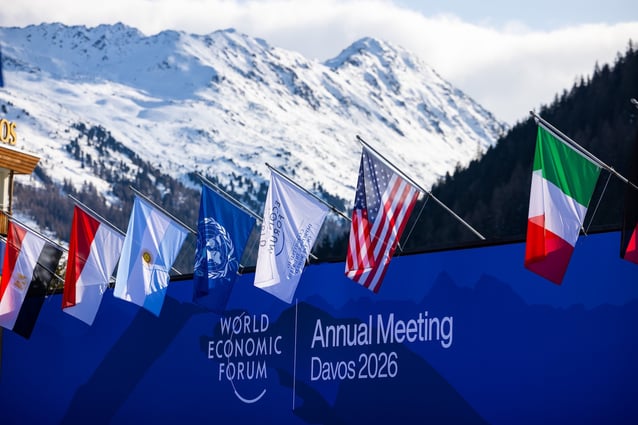 Events like the WEF concentrate extraordinary densities of appointments, locations, and people flows in a short period. Main challenges include: extremely tight scheduling windows, challenging climatic and geographic conditions, coordination among multiple stakeholders, simultaneous management of diverse profiles and priority levels.
For global events like the World Economic Forum, mobility management is not a standard service but a strategic orchestration that requires: advanced planning and alternative scenarios, premium fleet and carefully selected drivers, continuous movement monitoring, operational and human support, 24/7.
This is where the difference emerges between simple transport management and a high-value mobility solution capable of meeting the pace and expectations of a global context.
Balsamo: Supporting Mobility for Major International Events
For over 30 years, Balsamo has partnered with companies, institutions, and international event organizers, designing dedicated mobility solutions for high-profile individuals and delegations worldwide.
The know-how developed in complex and high-exposure contexts — such as economic forums, institutional summits, and global events — transforms mobility into an enabling factor: invisible when it works, essential when it matters.
The World Economic Forum 2026 demonstrates how, in major global meetings, moving efficiently means respecting time, ensuring safety, and creating continuity between meetings.
In an increasingly interconnected and complex world, the ability to manage strategic transportation is not just logistics — it is a competitive advantage.